Protecting birds from window collisions is a crucial aspect of environmental stewardship. This comprehensive guide delves into the multifaceted issue, exploring the reasons behind these tragic encounters and providing practical solutions for mitigating the risks. From understanding bird behavior to implementing effective preventative measures, we’ll examine various strategies for creating safer environments for avian inhabitants.
This guide covers a wide range of topics, including the science behind bird-window collisions, the identification of hazardous windows, and the implementation of bird-safe window design and construction techniques. The discussion also encompasses observational techniques for monitoring bird activity, and considerations for specific environments, ensuring a holistic approach to this critical issue.
Understanding Bird Behavior and Window Strikes
Bird collisions with windows are a significant threat to avian populations. This unfortunate phenomenon, often resulting in injury or death, stems from a complex interplay of factors related to bird vision, behavior, and environmental conditions. Understanding these factors is crucial for implementing effective mitigation strategies.Many birds are visually oriented, relying on their keen eyesight for navigating their environment and locating food sources.
However, the reflective nature of windows presents a significant challenge. The mirrored effect of windows can disrupt a bird’s natural perception of space, leading to misjudgments and collisions. Similarly, environmental conditions and the birds’ natural behaviors can further exacerbate this issue.
Reasons for Bird Collisions with Windows
Birds often mistake window reflections as part of their surroundings, leading to a direct flight path towards the perceived continuation of the environment. This misinterpretation arises from the mirroring effect of the window, creating an illusion of open space. Furthermore, birds’ natural behaviors, such as foraging, migrating, or roosting, can also contribute to collisions if they are unexpectedly confronted with a window.
Bird Vision and Window Reflections
Bird vision differs significantly from human vision, with some species possessing superior visual acuity. However, this exceptional vision does not always compensate for the deceptive reflections presented by windows. Birds often perceive the reflection as an extension of their surroundings, leading them to attempt a direct flight path into the reflection, resulting in collisions.
Susceptible Bird Species
Various bird species are susceptible to window collisions, including migratory birds, songbirds, and birds of prey. Common examples include robins, starlings, sparrows, and hummingbirds. The frequency of collisions can vary depending on the bird’s migratory patterns and habitat.
Impact of Light Conditions
Variations in light conditions, such as sunlight, moonlight, and artificial light, can influence bird behavior near windows. Strong sunlight reflecting off a window can disorient birds, particularly during migration or foraging. Conversely, moonlight or artificial light can also disrupt their natural navigation cues. For instance, brightly lit windows at night can attract birds, potentially leading them to collide with windows as they attempt to navigate or find a roosting spot.
Effect of Weather Patterns on Bird Activity
Weather patterns significantly affect bird activity near windows. Strong winds, rain, or snow can disorient birds and cause them to fly erratically, increasing the risk of collisions. For example, birds flying into a window during a sudden gust of wind are more likely to collide due to the sudden change in their flight path. Similarly, birds may fly towards windows seeking shelter from inclement weather, leading to increased risk of collisions.
Identifying and Assessing Window Hazards
Understanding bird behavior and window strikes is crucial for developing effective preventative measures. Identifying the characteristics of windows that pose the greatest risk to birds is the first step in mitigating collisions. This involves recognizing how birds perceive windows and the factors that influence their perception of space.Windows, often perceived as clear pathways or open spaces by birds, can be highly dangerous.
This misperception is compounded by various factors related to the window’s physical characteristics, which will be discussed in detail.
Types of Windows at Highest Risk
Windows constructed primarily of glass pose the greatest risk to birds. This is due to the transparent nature of glass, which allows birds to perceive the reflected sky or landscape as an extension of their natural surroundings. Fixed windows, without any visible openings or obstructions, are often particularly hazardous. Furthermore, large, uninterrupted expanses of glass are significantly more dangerous than smaller, divided windows.
The risk is further amplified when windows are positioned near trees, perches, or feeding areas, as birds are more likely to approach and collide with these windows.
Characteristics of Windows Perceived as Open Spaces
Birds often mistake windows for open spaces due to their reflective properties. The glass reflects the sky and surrounding environment, creating an optical illusion that leads birds to fly directly into the glass. Additionally, the smooth, uninterrupted surface of glass further contributes to this illusion, as birds are accustomed to flying through natural openings with varied textures. The lack of any physical obstructions or visual cues that the surface is not traversable is a significant contributor to the risk.
Furthermore, the perceived openness is often exacerbated when the windows are located in a location where birds are accustomed to flying or foraging.
Significance of Window Size and Shape
Window size and shape significantly impact collision risk. Larger windows offer a larger surface area for birds to collide with, increasing the likelihood of a strike. Similarly, windows with irregular or complex shapes, such as those with multiple panes or decorative elements, can present a more confusing visual cue to birds, increasing the chance of collision. A simple, rectangular window presents a relatively straightforward visual perception to birds, but a window with intricate shapes or patterns may be misinterpreted.
Assessing Window Visibility from a Bird’s Perspective
A simple method for assessing window visibility from a bird’s perspective involves physically stepping back and viewing the window from a bird’s eye level. This involves taking into account the height and angle from which a bird might approach the window. This method allows individuals to identify potential hazards, such as reflections or patterns that might be confusing to birds.
By taking this perspective, individuals can identify potential blind spots or areas where birds may be more prone to collision.
Comparison of Window Materials and their Impact
| Window Material | Bird Visibility | Collision Risk | Mitigation Options |
|---|---|---|---|
| Glass | High | High | Film, decals, etc. |
| Frosted Glass | Moderate | Moderate | More reflective |
| Other Materials | Low | Low | Less susceptible to collisions |
The table above illustrates the varying levels of visibility and collision risk associated with different window materials. Glass, being the most transparent, presents the highest risk. Frosted glass reduces visibility somewhat, thus mitigating the risk. Other materials, such as patterned or textured glass, can further reduce the risk.
Preventing Bird Collisions
Protecting birds from window collisions is crucial for their well-being. Many birds are drawn to the beauty and potential food sources that windows represent. However, the reflection of the outside world on a window can be fatal, as birds often mistake it for open sky. Implementing preventative measures can significantly reduce the risk of these collisions.Effective bird-safe window strategies combine understanding bird behavior with practical solutions.
By altering the visual perception of the window, we can help birds navigate safely and avoid fatal encounters.
Visual Deterrents
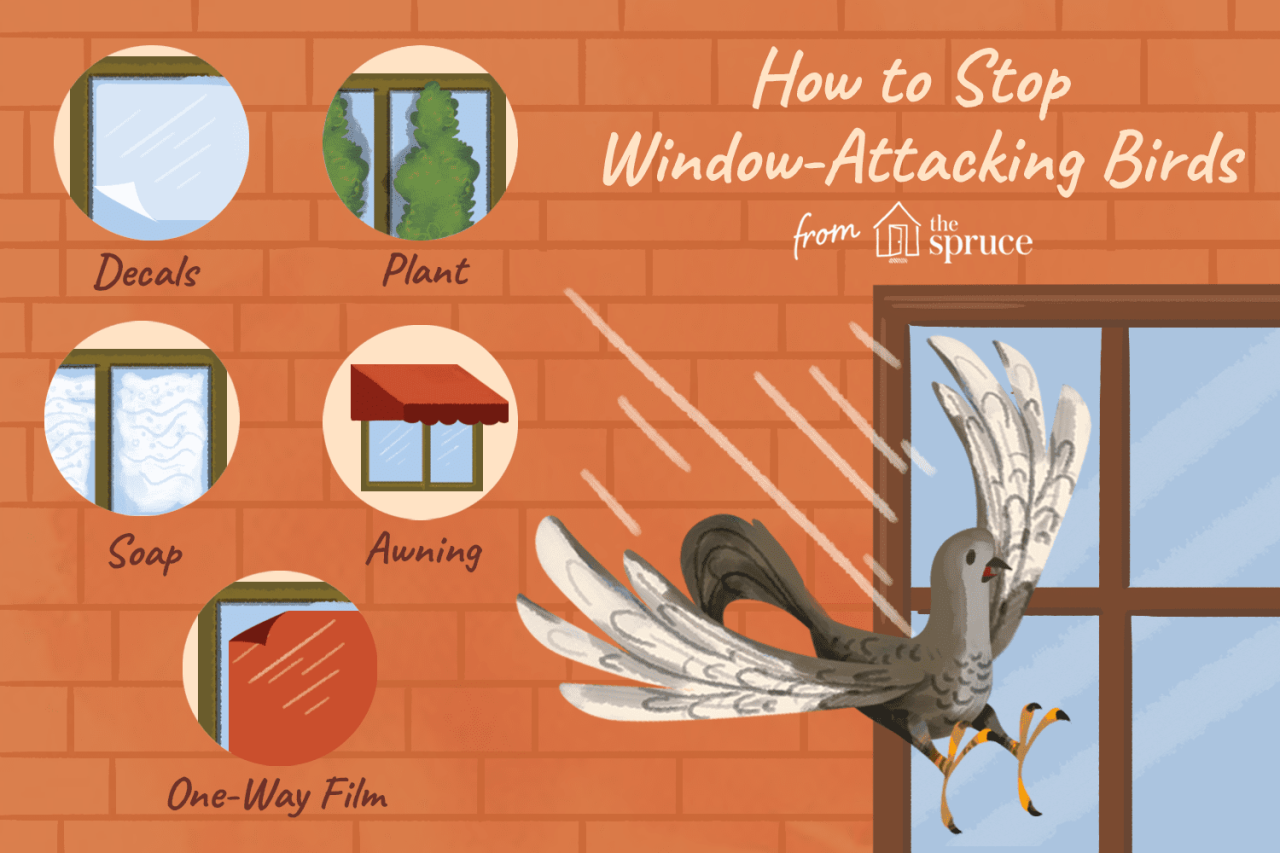
Understanding that birds are drawn to the visual cues provided by windows, visual deterrents can effectively reduce collisions. These methods break up the reflection of the landscape, making the window appear less like an open space and more like an obstacle. Common methods include using reflective or patterned materials to make the window surface less visually appealing to birds.
Decals and Films
Decals and films applied to windows are proven methods to reduce the visibility of the window’s reflective surface. Various types of decals, ranging from simple geometric patterns to more complex designs, can be used. Films, often available in frosted or patterned variations, achieve similar effects. These materials interrupt the reflection, making the window less enticing and more readily perceived as an obstacle.
Window Coverings
Window coverings can provide an effective deterrent, though their effectiveness varies. Opaque curtains, blinds, and shutters can fully obscure the window, preventing any reflection. However, sheer curtains or blinds, while providing privacy, may not fully obstruct the view, potentially leaving the reflection of the outdoors visible. The choice of covering depends on the desired level of privacy and bird safety.
Innovative Approaches to Window Design
Beyond traditional methods, innovative approaches to window design can further enhance bird safety. One such approach involves incorporating textured surfaces on the window’s exterior. These textures disrupt the smooth reflection, reducing the temptation for birds to fly into the window. Furthermore, installing bird-safe window films with patterns that mimic natural elements, such as trees or foliage, can be highly effective.
In some cases, specialized window coatings can be used to reduce glare and reflections, further enhancing bird safety.
Resource List
- Cornell Lab of Ornithology: Provides valuable information on bird behavior and window collisions, including research and recommended practices.
- National Audubon Society: Offers guidance on bird conservation and habitat preservation, often including insights into window collisions.
- BirdSafe: A website dedicated to bird safety, with information on products and strategies.
- Local Audubon chapters or wildlife rehabilitation centers: Local experts can provide valuable information and insights specific to your region.
Bird-Safe Window Design and Construction
Creating bird-safe windows is crucial for minimizing window strikes and promoting the well-being of avian populations. Proper design and construction can significantly reduce the risk of collisions, allowing birds to safely navigate the built environment. This approach goes beyond simply installing window treatments; it involves integrating bird-friendly principles into the very structure of the building.By understanding bird perception and incorporating appropriate design elements, we can create a harmonious coexistence between humans and birds.
This approach acknowledges the importance of avian visual cues and spatial awareness in avoiding potentially hazardous situations.
Importance of Clear Visual Perception for Birds
Birds rely heavily on visual cues for navigation and predator avoidance. Windows, with their reflective surfaces, often appear as open spaces, confusing birds and leading to collisions. Designing windows that allow birds to perceive the true nature of the surface is essential. Minimizing reflections and creating clear visual barriers can significantly reduce the risk of window strikes.
For example, textured glass or strategically placed vegetation can disrupt reflections, allowing birds to more accurately assess the window’s presence.
Bird-Safe Window Films and Decals
Bird-safe window films and decals are effective, affordable, and relatively simple methods for protecting birds. These products are designed to make windows less visually appealing to birds, disrupting the reflection that causes confusion.
Application of Bird-Safe Window Films and Decals
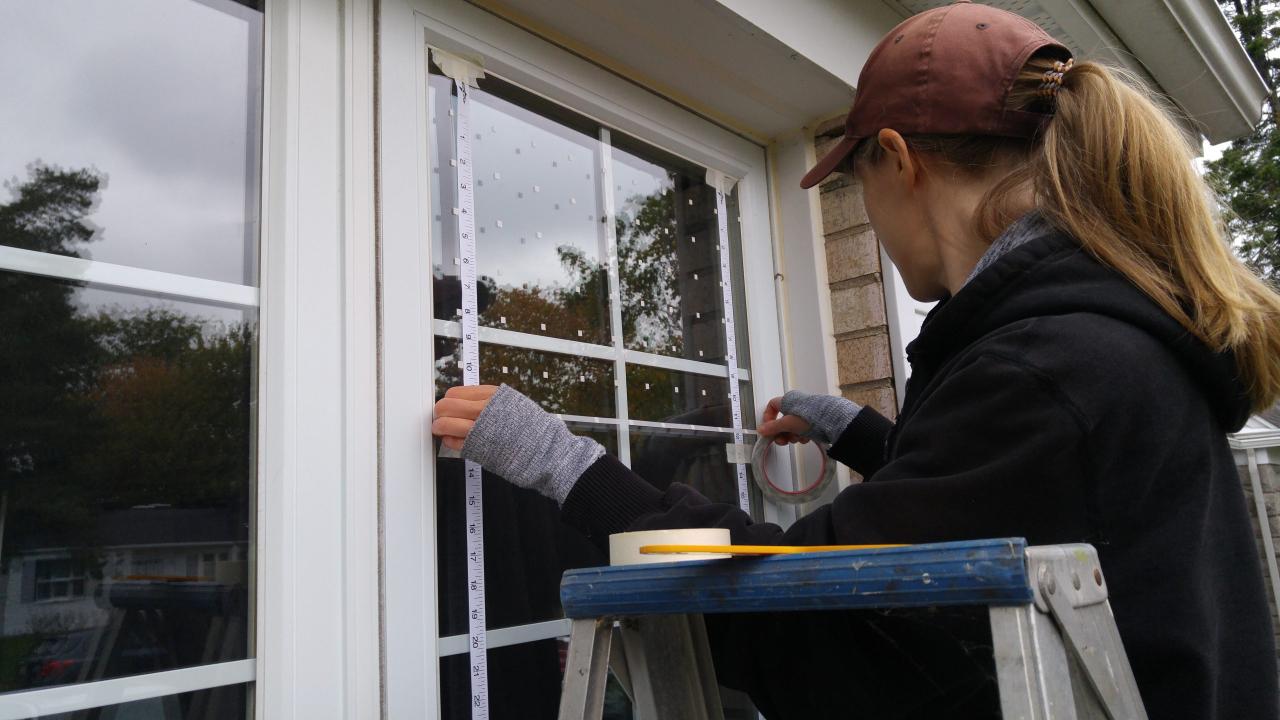
Applying bird-safe films and decals is generally straightforward. Most products come with clear instructions. Carefully following the manufacturer’s guidelines is critical for achieving optimal results. Professional installation is sometimes recommended for large windows or complex designs. Proper application ensures the film adheres securely and effectively.
Incorporating Bird-Safe Features During New Building Construction
Integrating bird-safe features during the construction of new buildings is highly beneficial. This proactive approach ensures that bird safety is considered from the outset, rather than being an afterthought. Careful consideration of window placement and design can greatly reduce the risk of window collisions.
Examples of Bird-Safe Features in Construction
Utilizing textured glass, strategically placed vegetation, or incorporating designs that interrupt reflections are all possible methods. For instance, buildings can be designed with windows that are less reflective or have strategically placed vegetation near the windows to provide visual cues to birds. This proactive approach can substantially reduce the impact of window strikes on bird populations.
Cost and Benefit Comparison of Window Protection Methods
The following table provides a comparison of different window protection methods, considering cost, effectiveness, and maintenance requirements.
| Method | Cost | Effectiveness | Maintenance |
|---|---|---|---|
| Film | Low | High | Low |
| Decals | Low | Moderate | Low |
| Perching Structures | High | High | Moderate |
Film applications, while affordable, offer a high level of effectiveness. Decals provide a moderate level of protection at a low cost. Perching structures, while offering high effectiveness, require higher initial investment and more frequent maintenance. The choice of method should be based on the specific needs of the building and the desired level of bird protection.
Observational and Monitoring Techniques
Careful observation and monitoring are crucial for understanding bird behavior near windows and optimizing preventative measures. By tracking bird activity, we can identify patterns in window strikes and tailor our solutions for maximum effectiveness. This knowledge allows us to refine strategies, ensuring the safety of these avian visitors.
Monitoring Bird Activity Near Windows
Regular observation of birds around windows is essential for identifying potential hazards and understanding their responses to the environment. Careful observation helps to identify window-related stress, which can be observed through changes in behavior. This includes changes in flight patterns, avoidance behaviors, and altered feeding habits. These observations can reveal the specific areas of concern and highlight the most effective preventative strategies.
Importance of Observation Periods
Extended observation periods are vital for identifying patterns in bird activity and their reactions to windows. Short-term observations may only capture a snapshot of behavior, whereas longer periods can reveal crucial trends. For example, a bird may only exhibit avoidance behavior during specific times of day or during certain weather conditions. By monitoring over an extended period, we can establish a more comprehensive understanding of the bird’s behavior and its relationship with the window.
Data Collection Methods
Systematic data collection is essential for analyzing bird activity and window strikes. Different methods can be employed, each providing valuable information. Bird counts, for example, record the number of birds observed in a specific area near the windows over a set time period. This helps to determine the frequency of bird activity and identify high-traffic areas. Collision reports document instances of birds striking windows, noting the time, location, and any associated factors.
These reports can pinpoint potential problem areas and highlight any patterns in the strikes.
Creating a Bird-Watching Log
A detailed bird-watching log is a valuable tool for organizing and analyzing observation data. This log should include specific details about the birds observed, such as species, approximate age, sex (if identifiable), and any notable behaviors. Note the date, time, and location of observations. Record any factors that might influence bird behavior, such as weather conditions, time of day, and presence of other birds or animals.
Recording these details will help to correlate behaviors with external factors, leading to a more comprehensive understanding of bird activity. For example, noting that collisions occur more frequently during periods of high wind can help in identifying potential solutions.
Example Data Collection
A table can be used to organize data collected from observation.
| Date | Time | Species | Location | Behavior | Collisions |
|---|---|---|---|---|---|
| 2024-08-15 | 08:00-09:00 | American Robin | East Window | Feeding, approaching window | 0 |
| 2024-08-15 | 09:00-10:00 | House Sparrow | West Window | Avoiding window, circling | 1 |
| 2024-08-15 | 10:00-11:00 | Mourning Dove | South Window | Perched on windowsill, no interaction | 0 |
This example illustrates how to collect and record data for analysis. Data collected can be further analyzed to identify patterns, enabling optimization of bird-safe measures.
Additional Considerations for Specific Environments
Understanding the unique characteristics of different environments is crucial for effectively mitigating bird-window collisions. Factors like the density of bird populations, building structures, and human activities significantly influence the risk level. Tailoring window safety measures to these specific contexts can substantially reduce bird mortality.
Urban Settings
Urban environments often present higher risks due to increased bird density and the presence of numerous reflective surfaces. Buildings in cities are frequently taller and closer together, potentially amplifying the problem. High-rise structures with many windows, particularly those facing open spaces or parks, are particularly vulnerable. The proximity of feeding areas and roosting sites also influences collision rates.
Suburban Settings
Suburban areas typically feature a mix of residential and commercial buildings, often with smaller yards and gardens. The presence of bird feeders and gardens, while providing valuable resources, can also attract higher concentrations of birds. The design and layout of suburban homes influence the effectiveness of bird-safe strategies. The presence of dense vegetation and varied habitats around homes and buildings also impacts the number of bird species present and the likelihood of collision.
Rural Settings
Rural areas, characterized by open spaces and agricultural lands, can present unique challenges. The presence of large expanses of open water, agricultural fields, and forests can attract migratory and resident bird species. However, the lower density of birds compared to urban areas might seem to imply lower risks, but the concentration of birds around specific locations, like water sources or feeding grounds, can be high.
The design of farm structures and agricultural facilities needs specific consideration.
Bird Density and Collision Risk
The concentration of birds in an area directly correlates with the risk of collisions. High-density areas, such as urban parks or locations with abundant food sources, necessitate more proactive measures to prevent collisions. Monitoring bird activity in specific areas can help predict high-risk periods and tailor interventions accordingly. For instance, during migratory seasons or breeding periods, bird density increases, and the risk of collisions rises.
Building Structures and Window Design
The design of buildings significantly impacts the effectiveness of bird-safe strategies. Tall buildings with large expanses of glass are particularly vulnerable. Incorporating bird-safe windows, such as those with patterned films or decals, is crucial. Multi-story buildings often necessitate specialized solutions, such as strategically placed barriers or netting, to minimize collisions.
Agricultural Areas and Bird-Safe Windows
Agricultural areas may involve specialized window safety strategies. Structures like barns, silos, and storage sheds can pose risks to birds, especially during specific seasons when food sources are abundant or during migration periods. Using bird-safe films or decals on windows of agricultural buildings is a practical approach. Specific types of films and decals might need to be evaluated for durability and effectiveness in harsh weather conditions.
Human Activity and Bird Behavior
Human activities, including feeding birds, can influence bird behavior near windows. The presence of feeders can attract large numbers of birds, increasing the potential for collisions. The placement of feeders relative to windows is crucial. Creating a bird-friendly environment that minimizes disturbances can also reduce collision risk. For example, minimizing noise pollution and keeping windows clean can significantly reduce the risk of birds colliding with them.
Final Summary
In conclusion, safeguarding birds from window strikes requires a multifaceted approach that blends scientific understanding with practical solutions. By addressing the causes, identifying risks, and implementing effective prevention strategies, we can create environments where birds can thrive without fear of injury. The information provided in this guide will empower individuals and communities to make a tangible difference in the lives of these vulnerable creatures.